Hitachi Seaside Park Kochia & Picnic Guide: Best Day Route
Japan Travel
0
Disclosure: This article contains affiliate links. If you book through them, we may earn a small commission at no extra cost to you.
When it comes to autumn scenery in Japan, one bucket-list sight every traveler should experience at least once is the fiery red kochia (summer cypress) at Hitachi Seaside Park (国営ひたち海浜公園) in Ibaraki Prefecture.
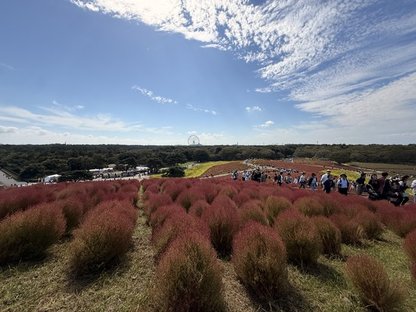
We visited during peak autumn kochia season when all of Miharashi Hill transforms into a vibrant crimson carpet. Seeing tens of thousands of fluffy, spherical bushes covering the entire hillside—contrasted against the deep blue Pacific Ocean from the summit—is even more breathtaking in person than in photos.
Hitachi Seaside Park is world-famous for three iconic seasonal spectacles: the baby-blue nemophila in spring, the crimson kochia in autumn, and its legendary summer music festivals (historically the sacred ground of the Rock in Japan Festival, and today home to LuckyFes, which draws over 100,000 music fans each summer).
However, when planning your first visit, you probably have plenty of practical questions: “It’s huge—where should I walk?”“Which parking lot or gate is closest to the flowers?”“Why does a national park charge an admission fee?”
In this comprehensive guide, we share our firsthand impressions of the kochia hills, the fascinating behind-the-scenes story of how the flowers are replanted by hand, and everything you need to know about park size, seasonal ticket pricing, and parking. Plus, we’ll walk you through our favorite full-day itinerary: picking up fresh pastries at the beloved local bakery Pan Kobo Guruguru (パン工房 ぐるぐる) for a lawn picnic inside the park, followed by souvenir shopping at a local farmers market on the way home!
Key Takeaways from This Guide
Miharashi Hill’s Dual Seasons: How over 30,000 kochia bushes and millions of spring nemophila are rotated by hand on the exact same hillside every year.
Massive Scale (215 Hectares): Over twice the size of Tokyo Disneyland and DisneySea combined—why choosing the right entrance gate and using the Seaside Train or rental bikes is essential.
Best Parking Lot for Flowers: Head straight to the West Parking Lot (West Gate / Wing Gate) for the shortest walk to Miharashi Hill.
Admission & Seasonal Pricing: Standard adult entry is ¥450, with a +¥350 peak-season surcharge (total ¥800) during prime nemophila and kochia periods.
Ultimate Picnic Itinerary: Stop by Hitachinaka’s famous bakery Pan Kobo Guruguru before entering, picnic on the Great Prairie lawn, and shop for Ibaraki dried sweet potatoes (hoshi-imo) at Kokosuna Farmers Market afterward.
Like a Giant Red Carpet! Our Kochia Experience on Miharashi Hill
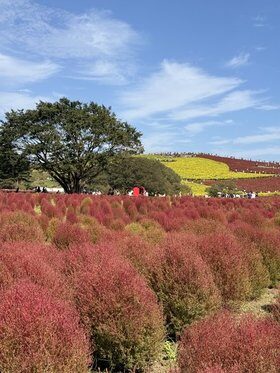
Fluffy crimson kochia bushes blanketing Miharashi Hill at Hitachi Seaside Park
A Hillside Blanketed in Fluffy Crimson Spheres
The moment you step toward Miharashi Hill (みはらしの丘, “Lookout Hill”), your entire field of vision fills with brilliant scarlet kochia.
Tens of thousands of neatly rounded, pom-pom-like bushes pack the slopes so densely that the hill looks like a plush red carpet. As you climb the winding footpath to the summit and look back, you are rewarded with a sweeping panorama where the crimson hill meets the deep blue waters of the Pacific Ocean and the autumn sky.
While shooting upward from the base of the hill gives you a dramatic wall of red, we also highly recommend photographing from near the top looking down with the ocean waves in the background.
What Kind of Plant Is Kochia, Anyway?
With its round, whimsical shape, kochia looks almost like a storybook creature, but its traditional Japanese name is Hokigusa (ホウキグサ, literally “Broom Grass”).
True to its name, in centuries past, Japanese households harvested and dried these sturdy, branched stems at the end of autumn to bind them into traditional hand brooms (kusa-boki). While prized today as an ornamental autumn spectacle, kochia actually has humble roots as an everyday household tool.
Are Spring Nemophila and Autumn Kochia on the Same Hill? How Do They Switch Them?
Yes! Both the iconic spring blue nemophila (baby blue eyes) and the autumn red kochia bloom on the exact same Miharashi Hill.
Because both are annual plants that complete their life cycle within a single year, the park staff perform a massive, all-hand-planted rotation twice every year:
Late May: Once the spring nemophila season ends, all plants are cleared and the hillside soil is tilled and prepared.
June to July: Over 30,000 tiny kochia seedlings are planted one by one by hand across the entire slope.
November: After the autumn kochia season concludes, every bush is pulled up and nemophila seeds are sown across the hill for the following spring.
It is thanks to this painstaking seasonal hand-cultivation that visitors can witness two completely different world-class landscapes on the same hill each year.
Book Hitachi Seaside Park Day Tours & Transport from Tokyo
Larger Than You Imagine: Understanding the Park’s Scale
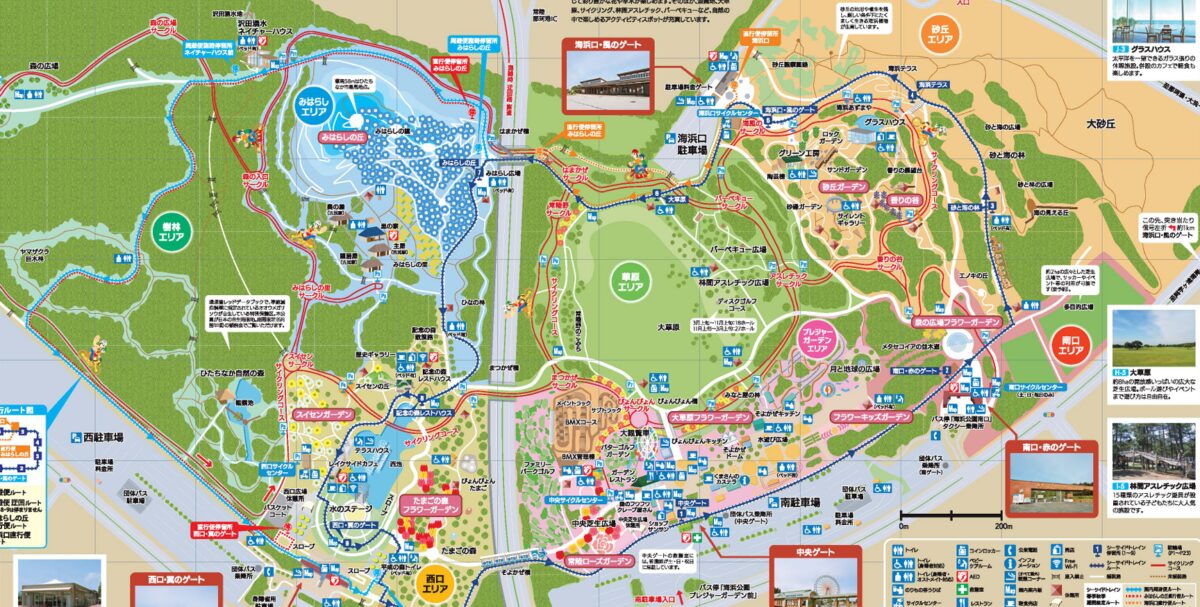
The open area of Hitachi Seaside Park spans roughly 215 hectares (531 acres)—equivalent to about 46 Tokyo Domes, or more than twice the combined size of Tokyo Disneyland and Tokyo DisneySea.
Even walking from the entrance gate to Miharashi Hill and back covers a substantial distance. Be sure to wear comfortable walking sneakers, and if you want to explore beyond the flower hills to the forest, sand dunes, or grassland zones, we strongly recommend utilizing the park’s rental bicycles (over 11 km of dedicated cycling paths!) or the hop-on hop-off Seaside Train park tram.
“National Government Park” vs. “National Park”: Why There Is an Admission Fee
Some visitors wonder why a national park charges an entrance fee. In Japan, there is an important distinction between a Kokuritsu Koen (National Park) and a Kokuei Koen (National Government Park):
National Parks (国立公園 – Ministry of the Environment): Free Admission Natural wilderness and ecosystems designated for conservation, such as Mount Fuji or Shiretoko. They have no perimeter gates or admission fees.
National Government Parks (国営公園 – Ministry of Land, Infrastructure, Transport and Tourism): Paid Admission Large-scale landscaped recreational parks built and maintained by the national government. Because they require year-round horticultural replanting, clean restrooms, pathways, and playground maintenance, a modest admission fee applies.
Here is the breakdown of admission and parking fees at Hitachi Seaside Park:
Regular Season Admission: Adults (15 & older): ¥450 | Seniors (65 & older): ¥210 | Children (Junior high school & under): Free
Peak Season Admission (Spring Nemophila & Autumn Kochia Peak): An additional +¥350 seasonal surcharge applies to support flower cultivation and crowd management, bringing total adult admission to ¥800.
Parking Fee: Standard passenger cars cost ¥600 per day (paid upfront upon entry).
Which Parking Lot Should You Choose? (By Destination)
Hitachi Seaside Park has three main parking lots holding over 4,000 vehicles in total. Picking the wrong lot will add a very long walk to your day, so choose based on your main goal:
West Parking Lot (西駐車場 – Approx. 2,000 spaces): Best for Kochia & Nemophila! Connected directly to the West Gate (Wing Gate / Tsubasa-no-Gate), this is the closest parking lot to Miharashi Hill. If your primary goal is seeing the flower hills, head straight here without hesitation.
South Parking Lot (南駐車場 – Approx. 2,000 spaces): Best for the Amusement Park Area Closest to the “Pleasure Garden” zone featuring the giant Ferris wheel, roller coasters, and family rides.
Seaside Gate Parking Lot (海浜口駐車場 – Approx. 350 spaces): Best for Sand Dunes & BBQ A smaller, quieter lot convenient for the coastal sand dune trails and the barbecue plaza.
When Is the Best Time to Visit? The 3 Major Seasonal Highlights
Hitachi Seaside Park transforms dramatically with the seasons. Here are the three signature times to visit:
Spring Nemophila (Mid-April to Early May): Over 5 million baby-blue nemophila flowers turn Miharashi Hill into a seamless sea of blue that blends into the sky and Pacific Ocean. Peak bloom usually coincides with late April through Golden Week.
Summer Music Festivals & Green Kochia (Mid-July to August): In summer, the kochia bushes are a vibrant, lime-green color, and the vast grassland hosts major open-air music festivals like LuckyFes.
Autumn Red Kochia (Mid-October to Late October): As autumn temperatures drop, the lime-green bushes gradually blush into a fiery crimson across the entire hillside, accompanied by blooming cosmos flowers at the base.
Our Recommended Day Route: Best Bakery & Market Stops Before and After the Park
1. Before Entering: Grab Fresh Pastries at “Pan Kobo Guruguru” for a Great Prairie Picnic
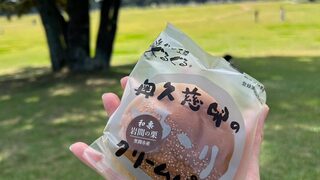
Before heading into the park, we stopped by Pan Kobo Guruguru (パン工房 ぐるぐる ひたちなか店), one of Hitachinaka City’s most famous local bakeries.
We picked up an assortment of freshly baked breads to go, carried them into the park, and spread out a picnic mat on the expansive Great Prairie (大草原エリア) lawn for lunch. Biting into pillowy, freshly baked local pastries under the wide-open blue sky was unforgettable. While the park has food stalls and cafes, bringing your own bakery haul for a lawn picnic skips the peak lunch lines and makes the day feel extra special.
Read our full tasting review of Pan Kobo Guruguru’s famous Okukuji Egg Cream Buns, Salted Butter Melon Pan, and savory breads in our dedicated article below:
2. After Leaving the Park: Shop for Local Produce & Dried Sweet Potatoes at a Farmers Market
After admiring the kochia and strolling through the park, we drove just a few minutes down the road to a local farmers market, Nagasuna Farmers Market Kokosuna (長砂ファーマーズマーケット ここすな).
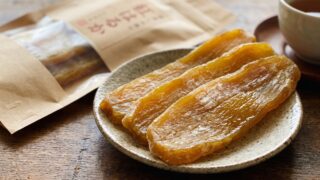
Stocked with morning-harvested Ibaraki vegetables, seasonal fruits, and Hitachinaka’s famous artisan hoshi-imo (干し芋, sun-dried sweet potatoes—of which Ibaraki produces over 90% of Japan’s supply!), it is the ultimate stop for edible souvenirs before heading back to Tokyo. (Tip: If you are driving by rental car and plan to buy fresh produce, bringing a small cooler bag is super handy!)
Access by Train & Bus: Take the JR Joban Line Limited Express Hitachi or Tokiwa from Ueno/Tokyo Station to Katsuta Station (勝田駅) (approx. 70–85 mins), then take the Ibaraki Kotsu Bus from East Exit Stop #2 (approx. 15–20 mins to West Gate).
Admission: ¥450 regular / ¥800 peak spring & autumn seasons (Junior high & under free)
The autumn kochia at Hitachi Seaside Park is even grander in scale than photos can capture, making it one of the best seasonal day trips from Tokyo. Pairing the flower hills with a local bakery picnic and a stop at a neighborhood farmers market turns a simple sightseeing visit into a full gourmet outing. Use this route as a blueprint for your own Ibaraki adventure!
Frequently Asked Questions (FAQ)
Q
Which parking lot and gate are closest to the kochia and nemophila hills?
A
The closest entrance to Miharashi Hill is the West Parking Lot / West Gate (Wing Gate / 翼のゲート)! Because the park is enormous, simply choosing the right gate for your destination will save you a huge amount of walking.
Q
Can I bring my own food, bento, or bakery pastries into Hitachi Seaside Park for a picnic?
A
Yes, outside food and non-alcoholic drinks are completely welcome! Spreading out a picnic sheet or a small pop-up shade tent on the Great Prairie lawn and enjoying freshly baked bread from local favorites like Pan Kobo Guruguru is one of the best ways to experience the park.



コメント