
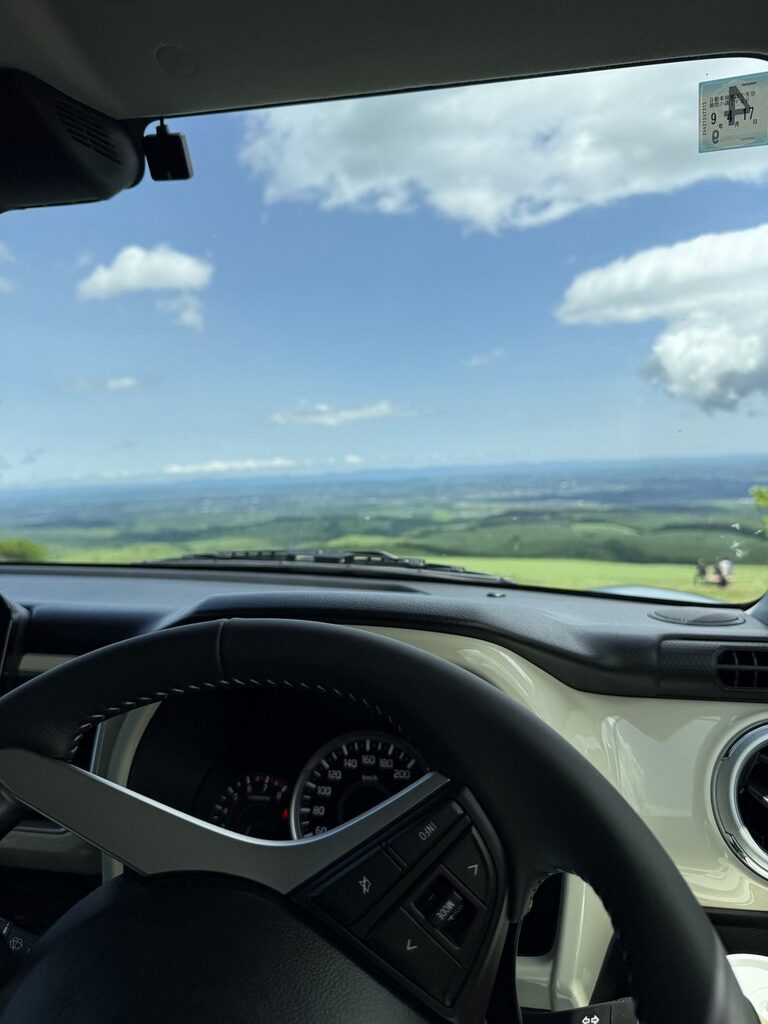
Disclosure: This article contains affiliate links. If you book through them, we may earn a small commission at no extra cost to you.
When most travelers plan a trip to Hokkaido, the classic itinerary almost always revolves around Sapporo, Otaru, and perhaps Furano or Biei. However, speaking as a former Hokkaido local—born in Obihiro and raised in Sapporo—I have always felt that Sapporo and Otaru are surprisingly urban and lack a bit of that untamed, wide-open spirit that makes Hokkaido truly special.
In fact, whenever my wife and I visit my family home in Sapporo, she has often remarked, “Sapporo doesn’t really feel like Hokkaido—it’s just too much of a big city.” That comment sparked the idea for this trip: a 5-day, 4-night itinerary that skips Sapporo and Otaru completely, traveling instead from Hakodate in southern Hokkaido to the crystal-clear waters of Lake Shikotsu, and finally deep into the vast plains of Tokachi and Obihiro.
People often say that Hokkaido is simply too vast to cover multiple regions in a single trip. However, by strategically combining the Hokkaido Shinkansen (bullet train), JR limited express trains, and a rental car, we were able to comfortably explore Southern, Central, and Eastern Hokkaido (the Tokachi region) in 5 days without feeling rushed.
Here are the highlights we covered along this route:
- Hakodate: Arriving via the Shinkansen to enjoy iconic harbor views, historic streets, and legendary local comfort food.
- Lake Shikotsu: One of Japan’s clearest caldera lakes—located just 40 minutes from New Chitose Airport, yet surprisingly overlooked by non-local tourists as an overnight stay.
- Taushubetsu River Bridge & Lake Shikaribetsu’s Underwater Tracks: Vanishing “phantom” concrete arches and submerged lakeside rails that left even a former Hokkaido resident like me in awe.
- Tokachi & Obihiro: Endless agricultural horizons, world-class local food culture, and rare amber-colored moor hot springs.
Aside from Hakodate, these destinations see far fewer international crowds than hotspots like Sapporo or Furano. While you certainly won’t be alone, they remain peaceful enough that you can savor authentic Hokkaido scenery at an unhurried, grown-up pace.
Blending the places that moved me on my first visit as a former local with the sights my non-Hokkaido-native wife loved most, here is our complete 5-day, 4-night Hokkaido road and rail itinerary.
- Skip the Big City: Trade urban Sapporo for historic Hakodate, tranquil Lake Shikotsu, and the sweeping farm plains of Tokachi.
- Smart Rail + Drive Strategy: Let the JR Hokuto Limited Express handle the long haul from Hakodate to Minami-Chitose, then pick up a rental car at New Chitose Airport.
- The “1 km = 1 Minute” Rule: Why rural Hokkaido roads are remarkably stress-free and faster to navigate than you think.
- Hidden Gems & Culinary Icons: Visit the vanishing Taushubetsu River Bridge, soak in Tokachigawa’s botanical moor onsen, and feast on Obihiro butadon pork bowls and 100% Tokachi wheat bread.
- 1. Itinerary Overview: Combining JR Trains and a Rental Car Over 5 Days
- 2. Day 1: Hakodate – Classic Harbor Sightseeing & an Unexpected Local Highlight
- 3. Day 2: Lake Shikotsu – From Morning Sushi in Hakodate to a Crystal-Clear Caldera Lake
- 4. Day 3: Into Tokachi – Lake Shikaribetsu & the Vanishing Taushubetsu River Bridge
- 5. Days 4–5: Tokachi & Obihiro – Endless Horizons, Local Food Icons & Moor Onsen
- 6. Conclusion: Mix Trains and Driving to Unlock a Freer Hokkaido
1. Itinerary Overview: Combining JR Trains and a Rental Car Over 5 Days
The secret to making this multi-region route work without exhaustion was not driving the entire way. Instead, we used the Shinkansen and JR Limited Express for the longest leg, then switched to a rental car from New Chitose Airport. Here is our exact 5-day schedule and transport breakdown:
| Day | Route & Main Highlights | Transport | Overnight Stay |
| Day 1 | Tokyo → Hakodate (Goryokaku Fort, Kanemori Red Brick Warehouse, Mt. Hakodate Night View, Lucky Pierrot, GLAY Automaton Clock at G Square) | Hokkaido Shinkansen + Local Train / Tram | Hakodate Station Area (JR Inn Hakodate) |
| Day 2 | Hakodate → Minami-Chitose (New Chitose Airport) → Lake Shikotsu | JR Limited Express Hokuto + Rental Car | Lake Shikotsu (Shikotsuko Daiichi Hotel Suizantei) |
| Day 3 | Lake Shikotsu → Lake Shikaribetsu (Underwater Rail Track) → Taushubetsu River Bridge → Obihiro | Rental Car | Obihiro Station Area (Tokachi Gardens Hotel) |
| Day 4 | Obihiro Area (Butadon no Tonta, Rokkatei Flagship, Masuya Pan “Mugioto” Bakery) | Rental Car | Tokachigawa Onsen (Tokachigawa Moor Onsen Seijakubo) |
| Day 5 | Tokachigawa Onsen → Naitai Terrace → New Chitose Airport → Flight Home | Rental Car + Flight | — |
Two Reasons We Covered Such a Wide Area Without Feeling Rushed
Looking at a map of Hokkaido, traveling all the way from southern Hakodate up to Lake Shikotsu and across to eastern Tokachi might look overly ambitious. In practice, however, the pace felt remarkably relaxed for two main reasons:
- Taking the JR Limited Express Hokuto Between Hakodate and Minami-Chitose
- Instead of renting a car in Hakodate and driving the long coastal highway north, we let the train handle the heavy lifting on Day 2. Relaxing on the JR Limited Express Hokuto saved hours of driving fatigue. Picking up our rental car right beside New Chitose Airport (via Minami-Chitose Station) made our onward loop to Lake Shikotsu and Tokachi effortless—and avoided hefty one-way car drop-off fees.
- Rural Hokkaido Driving Follows the “1 km = 1 Minute” Rule
- Locals in Hokkaido have a well-known rule of thumb for country driving: you can calculate travel time at roughly 1 kilometer per minute (meaning a 60 km drive takes about 1 hour). Once you head toward Tokachi from Day 3 onward, the roads are wide, straight, and have almost no traffic lights. Expressways are even faster. Compared to driving around Tokyo or Kyoto, there is virtually zero stop-and-go congestion, making long distances far less tiring than the numbers suggest.
2. Day 1: Hakodate – Classic Harbor Sightseeing & an Unexpected Local Highlight
Our journey began at Tokyo Station, boarding the Hokkaido Shinkansen bound for Hakodate for the very first time. While the Shinkansen doesn’t pull directly into downtown Hakodate Station—you transfer to the local Hakodate Liner train at Shin-Hakodate-Hokuto Station—it was far less physically taxing than flying through airport security and boarding gates. Settling into the spacious train seats made me realize just how comfortable entering Hokkaido by bullet train really is.
On Day 1 in Hakodate, we hit all the essential sightseeing and food icons:
- Goryokaku Fort & Goryokaku Tower: Sweeping views over Japan’s famous star-shaped Western citadel.
- Kanemori Red Brick Warehouses: Atmospheric historic port warehouses along the bay.
- Mt. Hakodate Night View: The famous twin-bay panorama overlooking the city lights.
- Hakodate Soul Food: Chinese chicken burgers at Lucky Pierrot, grilled pork skewers on rice (yakitori bento) from Hasegawa Store, and fresh seafood bowls (kaisendon).
Seeing all of that listed in a single day might make you wonder, “Can you really fit all of that into arrival day?” In Hakodate, the answer is an easy yes. Because the city’s major sights and eateries are compactly clustered along the vintage streetcar (tram) lines, you can comfortably cover the highlights even after arriving on the Shinkansen.
To be completely honest, since I had visited Hakodate’s classic landmarks many times growing up in Hokkaido, they felt familiar to me. My wife, however, who grew up outside Hokkaido, had a wonderful time—proving that Hakodate’s classic sightseeing circuit delivers sky-high satisfaction for first-timers.
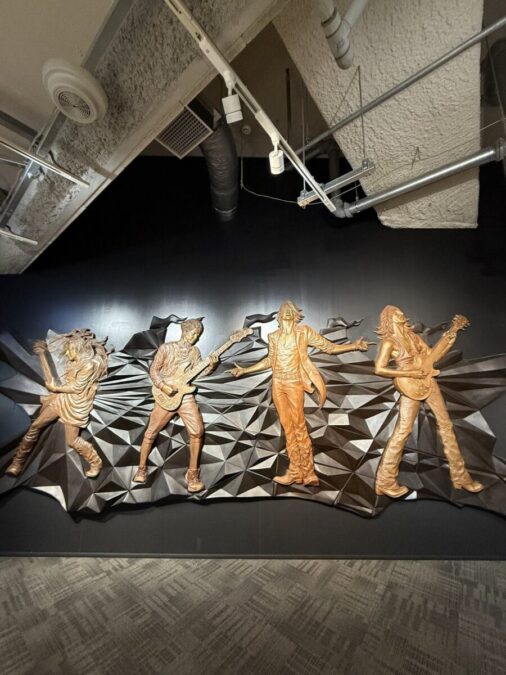
Meanwhile, the one spot in Hakodate that got me unexpectedly excited was the GLAY Automaton Clock!
Located on the 4th floor (G Square) of the modern Sharestar Hakodate complex near Goryokaku, this newly installed mechanical clock and bronze-style relief pays tribute to Hakodate’s legendary rock band, GLAY. Even though I stayed completely calm looking at Goryokaku and the million-dollar night view, this display had me grinning ear to ear. I couldn’t help laughing at myself thinking, “Who else besides a die-hard GLAY fan gets this hyped here?”—but personally, it was my most memorable moment in Hakodate.
That night, we stayed at JR Inn Hakodate, located right next door to Hakodate Station. It is a relatively new, spotless hotel with unbeatable station access (plus a great rooftop bath overlooking the trains), making our early morning JR departure the next day completely seamless.
3. Day 2: Lake Shikotsu – From Morning Sushi in Hakodate to a Crystal-Clear Caldera Lake
We kicked off Day 2 with an early-morning sushi breakfast in Hakodate. After savoring one last taste of southern Hokkaido’s seafood, we boarded the JR Limited Express Hokuto from Hakodate Station and rode north to Minami-Chitose Station.
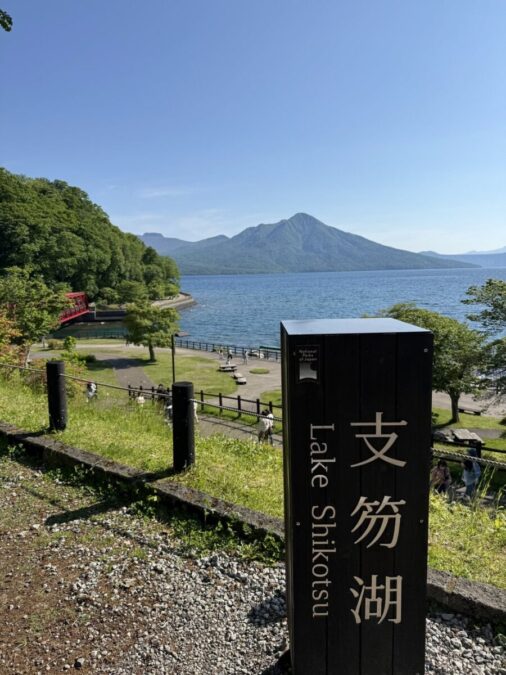
From Minami-Chitose Station (adjacent to New Chitose Airport), we picked up our rental car and drove straight to Lake Shikotsu (支笏湖).
Lake Shikotsu is only about a 40-minute drive from New Chitose Airport. While it is a beloved weekend getaway for Hokkaido locals, most out-of-prefecture and international travelers rush straight from the airport to Sapporo or Furano—making Lake Shikotsu a surprisingly underrated hidden gem.
When you stand on its shore, the first thing that strikes you is the extraordinary water clarity, regularly ranked among the purest in Japan. Simply strolling along the quiet lakeside promenade is a joy, and on a sunny morning, the water glows a vivid “Shikotsu Blue.” Every season offers something distinct: vibrant foliage in autumn, lush greenery in summer, and the magical Lake Shikotsu Ice Festival (Hyoto Matsuri) featuring illuminated ice sculptures in winter.
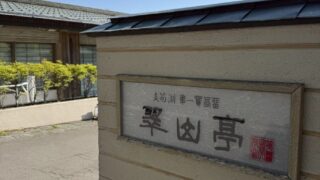
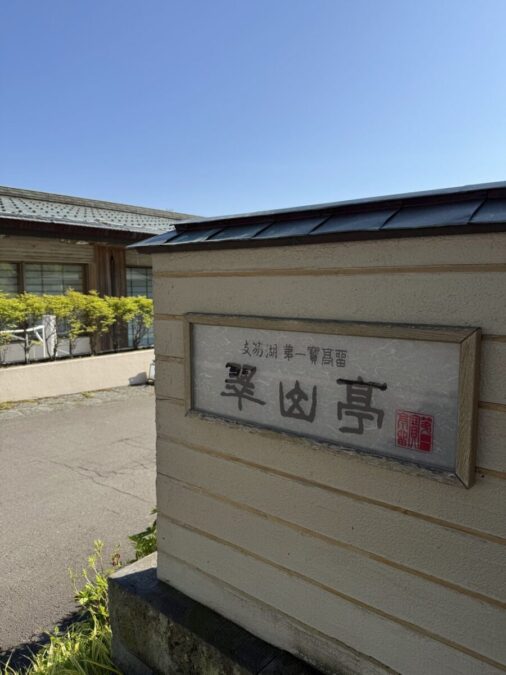
That night, we treated ourselves to our first stay at the prestigious lakeside ryokan Shikotsuko Daiichi Hotel Suizantei (支笏湖 第一寶亭留 翠山亭). Combined with the hushed atmosphere of the caldera lake, this adults-only (13+) luxury inn was unforgettable. You can read our full stay review in the article below:
4. Day 3: Into Tokachi – Lake Shikaribetsu & the Vanishing Taushubetsu River Bridge
On Day 3, we drove east from Lake Shikotsu into the heart of Hokkaido, crossing into the dramatic wilderness of northern Tokachi. Even though I grew up in Hokkaido, this day included two bucket-list sights I had never seen in person before: the Underwater Rail Track at Lake Shikaribetsu (然別湖の湖底線路)—a boat-launch track disappearing straight into the mirror-like alpine lake, famously reminiscent of a scene from a Studio Ghibli film—and the Taushubetsu River Bridge (タウシュベツ川橋梁).
Nicknamed the “Phantom Bridge,” the Taushubetsu River Bridge is an abandoned concrete arch railway bridge on Lake Nukabira that submerges and re-emerges as water levels fluctuate throughout the year.Weighing decades of freeze-thaw erosion, it is slowly crumbling back into nature and may collapse completely in the near future. Standing before those weathered arches in the quiet forest was truly breathtaking.
After spending the day exploring these surreal natural and historical landscapes, we drove down into downtown Obihiro and checked into the classic Tokachi Gardens Hotel right in front of JR Obihiro Station—famous for its authentic Finnish-style löyly sauna and natural moor hot spring baths.
5. Days 4–5: Tokachi & Obihiro – Endless Horizons, Local Food Icons & Moor Onsen
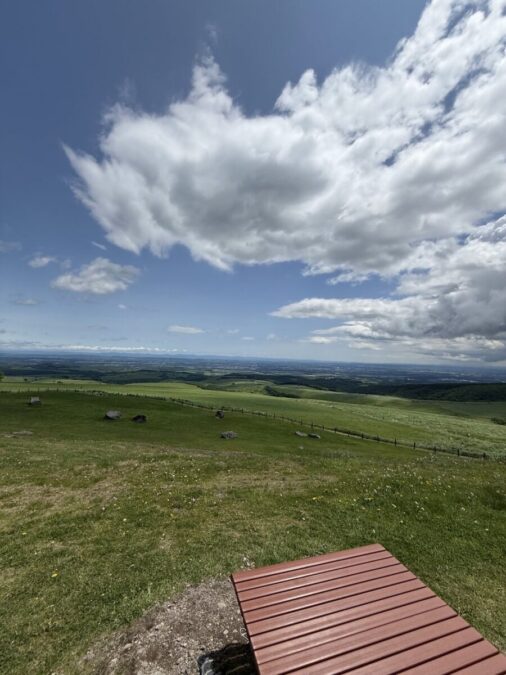
We dedicated the final two days of our trip (Days 4 and 5) to thoroughly savoring the Tokachi and Obihiro region.
Unlike urban sightseeing hubs such as Sapporo or Otaru, Tokachi greets you with endless agricultural plains, birch tree windbreaks, and snow-capped mountain ranges in the distance. Even from a Hokkaido native’s perspective, Tokachi embodies the quintessential “true Hokkaido” landscape—and it is the area I recommend most enthusiastically from this entire itinerary.
During the day on Day 4, we went on a culinary tour of my personal favorite gourmet spots in my birthplace of Obihiro:
- Butadon no Tonta (ぶた丼のとん田): An undisputed legend for Obihiro’s signature butadon (grilled pork rice bowl). Thick, tender slices of local pork glazed in a sweet-savory charcoal-grilled sauce—no matter how many times I eat it, it is pure perfection.
- Rokkatei Obihiro Flagship Store (六花亭 帯広本店): Famous across Japan for its Marusei Butter Sand cookies, Rokkatei was founded right here in Obihiro. Eating freshly made, store-exclusive pastries (like crispy Sakusaku Pie with a 3-hour shelf life) in the flagship café is an experience you simply cannot get at airport souvenir shops.
- Masuya Pan “Mugioto” (満寿屋商店 麦音): Officially Japan’s largest standalone bakery by land area, where you can dine on freshly stone-oven-baked bread made from 100% single-origin Tokachi wheat out on a sprawling 11,000 m² garden terrace.
Read our complete guide to Masuya Pan Mugioto here: Masuya Pan Mugioto Bakery Guide (Obihiro) (Japanese article).
For our final night on Day 4, we celebrated the grand finale of our trip at Tokachigawa Moor Onsen Seijakubo (十勝川モール温泉 清寂房). Here, we soaked in Tokachigawa’s rare plant-derived moor onsen—ancient botanical hot spring water rich in natural humic substances that leaves your skin feeling silky smooth—inside a serene, single-story luxury retreat where every guest room features its own private open-air bath. Read our detailed stay review at Tokachigawa Moor Onsen Seijakubo Review.
On Day 5, our final day, we drove up to Naitai Terrace (ナイタイテラス / Naitai Highland Ranch) in Kamishihoro—the largest public cattle ranch in Japan, spanning 1,700 hectares. After soaking in the 360-degree green pastures and the sheer scale of the Tokachi Plain one last time from the hilltop café, we hopped onto the Doto Expressway, drove smoothly back to New Chitose Airport to return our rental car, and caught our flight home.
6. Conclusion: Mix Trains and Driving to Unlock a Freer Hokkaido
That concludes our 5-day, 4-night Hokkaido journey—riding the Shinkansen from Tokyo into Hakodate, connecting by JR train to New Chitose Airport, and driving through Lake Shikotsu all the way to the plains of Tokachi.
It is easy to assume that Hokkaido is too huge to combine multiple regions in a single trip. Yet by pairing the Shinkansen, JR limited express trains, and a rental car, 5 days is plenty of time to cover Southern, Central, and Eastern Hokkaido at a comfortable, unhurried pace. In particular, riding the Hokkaido Shinkansen into the Hakodate area for the first time was a wonderful discovery—even with the quick transfer at Shin-Hakodate-Hokuto Station, it felt much more relaxing on the body than flying.
Today, the standard Hokkaido tourist trail almost always follows the same script: “Spend a couple of days in Sapporo and Otaru, drive to Furano, snap a photo at Biei’s Blue Pond…” If you have already done the classic route—or if you want to experience the raw natural beauty and culinary heartland that locals love—we hope this Hakodate, Lake Shikotsu, and Tokachi itinerary inspires your next adventure in northern Japan.

コメント