
Disclosure: This article contains affiliate links. If you book through them, we may earn a small commission at no extra cost to you.
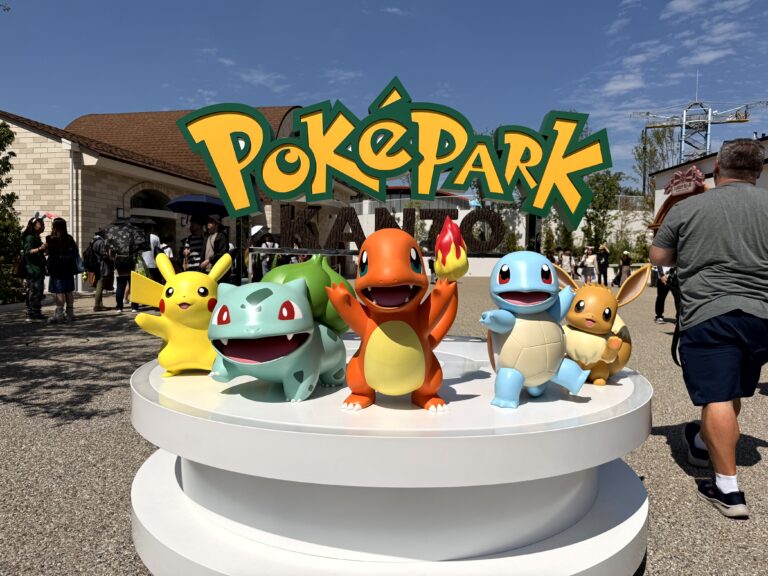
Hello everyone! In May 2026, we visited PokéPark Kanto (ポケパーク カントー), the brand-new outdoor Pokémon theme park zone that opened inside Yomiuriland in Tokyo.
Nearly 30 years have passed since the original Japanese release of Pokémon Red and Green. As someone who has logged over 2,000 hours across the Pokémon video games and spent years competing in online ranked battles, I can tell you firsthand: this park is an absolute love letter to Pokémon fans, overflowing with respect for the original games.
In this guide, I will walk you through the top highlights from our visit, critical things you must know before you go (including app timed-entry passes and ticket types), and a complete 1-day model itinerary so you can make the most of your trip!
- Meet Over 600 Pokémon: Discover life-sized Pokémon with unique expressions and personalities across Sedge Town (Kayatsuri Town) and Pokémon Forest.
- Step Inside Kanto Route 1: Heal your Pokémon at a real-life Pokémon Center, buy Potion cookies at the Poké Mart, and grab Fresh Water or Lemonade from game-accurate vending machines.
- App Timed-Entry Strategy: Why you must open the official PokéPark app the moment you enter Yomiuriland to secure numbered tickets for the Greeting House, Shop, and Gym Show.
- 100% Cashless & Compact: At 2.6 hectares (about 1/20th the size of Tokyo Disneyland), it is easy on your feet—just bring a credit card/IC card and a portable phone charger.
Top 3 Highlights of PokéPark Kanto
1. Encounter Over 600 Pokémon Living in the Park!
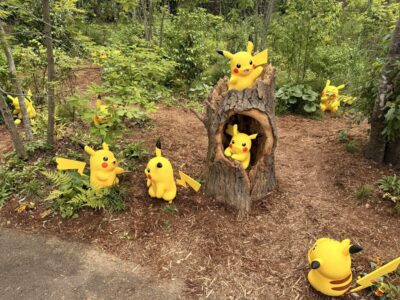
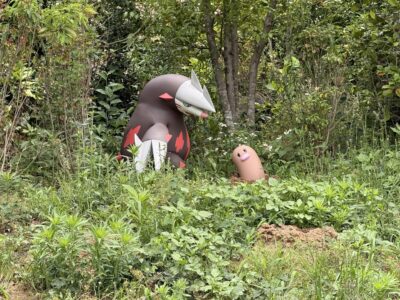
More than 600 individual Pokémon (note: 600+ total figures, not 600 different species) live throughout the park grounds. Rather than just being static statues placed at random, if you look closely, every single one differs slightly in size and expression—some are angry, some are laughing, some are totally deadpan, and others are fast asleep! Comparing them and thinking, “Oh, this little one has such a quirky personality,” is the main event for many visitors.
2. Step Directly Into the World of the Pokémon Video Games
The moment you step inside, you are transported straight into the Kanto region of the video games. You can visit a Pokémon Center whose exterior looks identical to the games and watch your Pokémon get healed, pick up Potion (Kizugusuri) souvenir cookies at the Poké Mart (Friendly Shop), buy Fresh Water (Oishii Mizu), Soda Pop (Saiko Soda), and Lemonade (Mikkusu Ore) from real-life vending machines, and wander through Pokémon Forest, which faithfully recreates Kanto’s iconic Route 1 from Pokémon Red and Green.
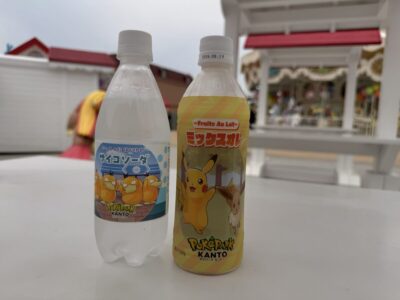
Best of all, Soda Pop (¥250) and Lemonade / Mikkusu Ore (¥350) are sold in the vending machines at the exact same prices as in the video games!
3. Exclusive PokéPark Food, Mystery Pin Badges & Souvenirs
PokéPark Kanto has tons of exclusive merchandise and interactive activities. One of the hottest items is the Poké Ball Mystery Pin Badge collection featuring all 151 original Kanto Pokémon—you don’t know which Pokémon you got until you open the Poké Ball! Each badge costs ¥1,200 (tax included), and when we visited at the end of May 2026, purchases were strictly limited to one per person. You can also shop for souvenirs at the Pokémon Daisuki Shop and grab themed food and snacks at stalls around Sedge Town (Kayatsuri Town).
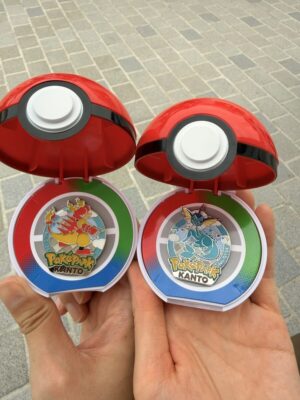
We pulled Magmar and Vaporeon—which felt like a pretty lucky haul! Even if you don’t pull your favorite Pokémon on the first try, there is a Pin Trading system inside the park: you can trade pins with staff members wearing pin lanyards or swap them on pin-trading boards at the festival stalls. (That said, we noticed the public trading boards tended to be overwhelmingly flooded with Drowzee pins…)
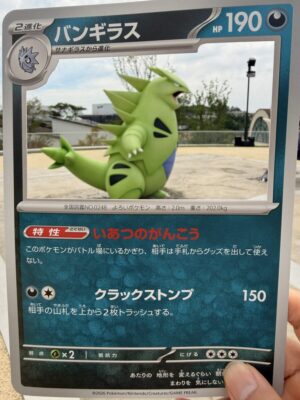
There is also a fun photo-hunt event where you track down designated Pokémon and snap photos of them framed like Pokémon Trading Card Game illustrations. Show your completed photos to the staff, and you’ll receive a special Pokémon card sticker!
PokéPark Kanto Map, Layout & Size
On the official website, PokéPark Kanto is divided into three zones: PokéPark Entrance Plaza, Sedge Town (Kayatsuri Town / カヤツリタウン), and Pokémon Forest (ポケモンフォレスト). In practice, however, it makes more sense to think of the park as two main areas: Sedge Town and Pokémon Forest.
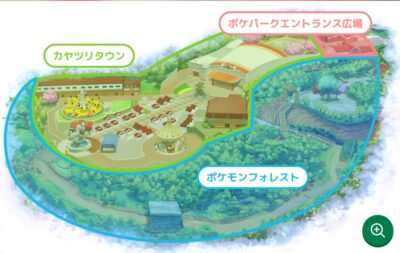
- Pokémon Forest (ポケモンフォレスト): A natural woodland trail where you encounter wild Pokémon in their habitats. Time needed: Approx. 30–60 minutes.
- Sedge Town / Kayatsuri Town (カヤツリタウン): The lively hub for shopping, attractions, food stalls, the Kayatsuri Gym show, and character greetings. Time needed: Approx. 2–4 hours.
- PokéPark Entrance Plaza (ポケパークエントランス広場): Houses the entrances to both Pokémon Forest and Sedge Town, as well as the Pokémon Daisuki Shop.
How big is PokéPark Kanto? Honestly, it is quite compact. Sedge Town, where you will spend the majority of your time, is roughly the size of a spacious school athletic field, and Pokémon Forest isn’t overwhelmingly huge either. When I looked up the exact figures, PokéPark Kanto covers about 2.6 hectares, whereas Tokyo Disneyland is about 51 hectares—meaning PokéPark is roughly 1/20th the size of Disneyland. Walking around in person felt right in line with that comparison. Bigger isn’t always better, though: for someone like me who gets exhausted walking all day at Disney, PokéPark is the perfect size to enjoy thoroughly without getting worn out.
How to Get to PokéPark Kanto from Tokyo
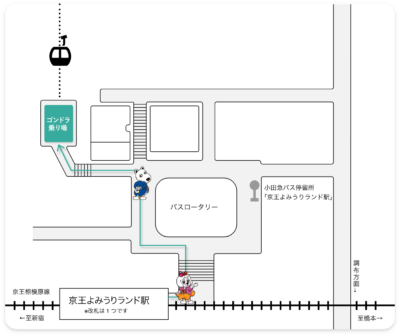
We traveled to PokéPark by train. The closest station is Keio Yomiuriland Station (京王よみうりランド駅) on the Keio Line (easily accessible from Shinjuku Station in about 25–30 minutes). Because PokéPark Kanto is located inside the Yomiuriland amusement park, you must first enter Yomiuriland’s main gate and then walk to the PokéPark zone inside.
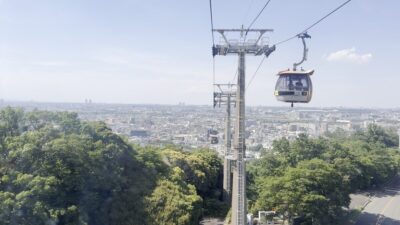
From Keio Yomiuriland Station to the Yomiuriland main entrance gate at the top of the hill, we rode the Sky Shuttle gondola (cable car). On the day we visited, the gondola began operating at 8:30 AM. If you want to arrive even earlier to line up at the park gates before 8:30 AM, you will need to take the local bus or walk about 20 minutes uphill (via the “Giant Sky Road” steps). At ¥500 round-trip, the gondola is fast, scenic, and by far the most enjoyable way to reach the entrance.
5 Essential Tips & Warnings Before You Visit PokéPark Kanto
To avoid disappointment on the day of your visit, advance preparation and app strategy are crucial. Here are the key lessons we learned firsthand:
1. Advance Ticket Purchase via the Official App is Mandatory
To enter PokéPark Kanto, you must download the official PokéPark Kanto smartphone app and purchase your admission ticket in advance. At present, buying same-day walk-up tickets is virtually impossible. In particular, the top-tier Elite Trainer’s Pass sells out immediately, so be sure to check the official release schedule and enter the ticket lottery early.
Here is a quick breakdown of the three ticket tiers (check the official website for full pricing and details):
- Town Pass (タウンパス): Grants admission to Sedge Town (Kayatsuri Town) only.
- Trainer’s Pass (トレーナーズパス): Grants admission to Sedge Town + Pokémon Forest (with a designated timed-entry slot).
- Elite Trainer’s Pass (エリートトレーナーズパス): Grants admission to Sedge Town + Pokémon Forest (without time restrictions) + exclusive perks and priority benefits.
To keep costs reasonable, we purchased the standard Trainer’s Pass, and in our experience, the Trainer’s Pass is more than enough for most visitors to have a fantastic time.
2. Open the App the Instant You Enter Yomiuriland to Grab Timed-Entry Tickets!
- Pokémon Fureai House (Character Greeting): First-come, first-served — Extremely hard to get!
- Pokémon Daisuki Shop (Souvenir & Merch Store): First-come, first-served — Moderately easy if you arrive in the morning.
- Kayatsuri Gym (Live Stage Show): Lottery system — Generally easy to win.
As soon as you scan into Yomiuriland’s main park gate, the official app unlocks digital numbered tickets (timed-entry reservations) for the three facilities above. You cannot enter any of these three venues without an app reservation.
By far the hardest pass to snag is the character greeting facility right near the entrance, Pokémon Fureai House. When we entered Yomiuriland at 9:45 AM, every single slot for the entire day was already gone! Thankfully, we managed to secure slots for both the Pokémon Daisuki Shop and the Kayatsuri Gym show. However, the shop time slots were already filling up fast at 9:45 AM, so arriving late puts you at risk of missing out on merchandise shopping too. The moment you step through Yomiuriland’s gate, stop to open the app and book all three passes before doing anything else!
3. PokéPark Kanto is 100% Cashless
While some stalls in the main Yomiuriland amusement park still accept cash, inside PokéPark Kanto, all payments are strictly cashless (including the in-game vending machines!). Make sure you bring a credit card, transit IC card (Suica / PASMO), or supported QR payment app.
4. Expect a Long Bag-Check Line to Enter Sedge Town at Opening
Under the current system, Sedge Town opens at 11:00 AM, and because almost every visitor heads there first, a major bottleneck forms at the entrance gate’s security bag check. We joined the queue around 10:50 AM, and we didn’t actually get inside until around 11:30 AM (a 40-minute wait). If you book an early morning shop or forest reservation slot in the app, factor in this entry congestion so you don’t miss your window!
5. Prepare for Sun, Heat, and Unpaved Forest Trails
It was sunny and hot on the day we visited, and we quickly noticed that there is surprisingly little shade or rain cover inside the park. At one point we thought, “We’d love to stay longer, but the heat is just too much!”—so bring a hat, parasol, cooling wipes, and water on warm days. Additionally, Pokémon Forest features unpaved woodland paths where you walk right up close to the Pokémon, so wear comfortable sneakers you don’t mind getting a little dusty or muddy after rain.
1-Day Model Itinerary & Crowd Strategy
Because PokéPark Kanto revolves around several timed-entry facilities, the golden rule is simple: use the gaps between your fixed reservation windows to line up for walk-up queues.
- Timed-Entry Facilities: Pokémon Forest (unrestricted for Elite Trainer’s Pass holders), Pokémon Daisuki Shop, Kayatsuri Gym Show, Pokémon Fureai House.
- Walk-Up Facilities That Get Long Lines: Poké Ball Pin Badge stall, Pokémon Center (healing experience), and food stalls during peak lunch hours.
The Poké Ball Pin Badge booth draws the longest line in the park. Right after opening, the line was so crowded that staff temporarily suspended queuing altogether. When queuing reopened in the afternoon, we waited about 30 minutes to buy our pins. Aside from the pin booth, the Pokémon Center, and lunchtime food counters, nothing else had a major wait—even on a Sunday!
Sample Day Schedule
- 10:00 AM: Arrive at Keio Yomiuriland Station. Ride the Sky Shuttle gondola or bus up to the gate.
- 10:30 AM: Enter Yomiuriland’s main amusement park gate.
- 10:45 AM: [CRITICAL] Open the PokéPark app immediately to secure your 3 numbered passes (Fureai House, Daisuki Shop, and Kayatsuri Gym Show)!
- 10:50 AM: Line up at the Sedge Town entrance gate for security bag check.
- 11:00 AM: Sedge Town opens! Pass through bag check and step into the world of Pokémon.
- Late Morning – Early Afternoon: Shop at the Pokémon Daisuki Shop during your reserved slot, grab a cold Fresh Water or Soda Pop from the vending machine, and explore Sedge Town—taking photos of the 600+ Pokémon (including expressive Pikachus, intense battle scenes, and a hilarious manga-style Clefairy).
- 2:00 PM: Watch the high-energy live stage show inside the Kayatsuri Gym!
- 3:30 PM: Enter Pokémon Forest during your Trainer’s Pass time slot to trek through Route 1 and spot wild Pokémon in the woods.
- 6:00 PM: Enjoy the magical evening illuminations across Sedge Town, then head out smoothly just before the 7:00 PM closing rush.
Final Thoughts: 30 Years of Pokémon Love Across Generations
This year marks exactly 30 years since I first met Pokémon in Pokémon Red and Green. Over the decades, I have played more than 2,000 hours of the games and even livestreamed competitive Pokémon battles online. Back in the 1990s, even though the anime and games sparked a massive social phenomenon, Pokémon was still largely seen as something for kids.
Looking around PokéPark Kanto on this trip, however, I saw real-life “Bug Catchers” (young kids), “Swimmers / Lass” (young women in their twenties), and “Hikers” (middle-aged guys like me) all proudly carrying plushies of their favorite partner Pokémon. Seeing so many generations sharing the same excitement made me deeply emotional about how deeply Pokémon has woven itself into our lives over the past 30 years.
Frequently Asked Questions (FAQ)
- QWhat is the #1 thing I must prepare before visiting PokéPark Kanto?
- A
In addition to booking your admission ticket in advance on the official app, bringing a portable power bank (mobile battery) is essential. Between managing app timed-entry passes and taking hundreds of photos and videos, your smartphone battery will drain very quickly. Also, wear comfortable walking sneakers for the unpaved forest trails, and bring cashless payment cards.
- QHow can I avoid the worst crowds at PokéPark Kanto?
- A
Arrive at Yomiuriland early (around 9:00–9:30 AM if you want a chance at the Pokémon Fureai House greeting pass), claim your digital numbered tickets on the app the second you scan into the main gate, and hit popular photo spots and food stalls outside the 12:00–1:30 PM lunch peak.
- QWhere is the best area in Tokyo to book a hotel when visiting PokéPark Kanto?
- A
Staying near Shinjuku Station (the terminal for the Keio Line), Chofu, Tachikawa, or Machida gives you fast, direct train access to Keio Yomiuriland Station while keeping you well-connected for sightseeing in central Tokyo the next day.
コメント